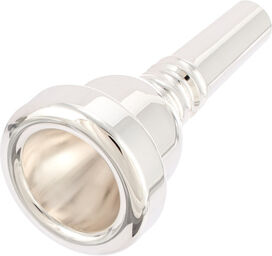
Top L 72 Bronze Trombone
by AR Resonance
Stairville Led Bar 120/4 RGB DMX 30° 0,5m, Barre à LEDs, Source: 120 LEDs de 10 mm (48 rouges, 36 vertes, 36 bleues), Mélange de couleurs RGB, 4 segments contrôlables individuellement, Angle de diffusion: 30°, Mode DMX-512 (2, 3, 5, ou 12 canaux), Mode maître/esclave, Mode autonome (programmes internes), Mode musique grâce au microphone intégré, Couleurs statiques, Fonctions réglables via écran LED, Alimentation: AC 90/240V - 50/60 Hz, Consommation max.: 16 Watt, Entrée et sortie DMX sur XLR 3 broches, Entrée et sortie secteur CEI, Boîtier en aluminium, 4 étriers de fixation incl. (2 courts et 2 longs), Température de fonctionnement (intérieur): -10°C à +40°C, Dimensions: 510 x 65 x 88,5 mm, Poids: 1,1 kg, Télécommande infrarouge adaptée optionnelle non-fournie (N° d'article #354223#)
"Stairville DMX-Master I Tour Bundle@+*Offre Bundle comprenant*, Stairville DMX-Master I@+*Pupitre d'éclairage DMX*, Pour jusqu'à 12 appareils avec jusqu'à 16 canaux DMX (192 canaux DMX), 30 banques de 8 scènes programmables pour un total de 240 scènes, 6 chenillards programmables pour un total de 240 scènes, Réglage de canal DMX avec 8 faders et commutation de banque, Vitesse d'éxécution des scènes réglable via fader, Contrôle musique grâce au micro intégré, Fade -Time réglable (0-30 secondes), Master Black Out, Format: 19"" - 3U, Profondeur: 65 mm, Dimensions avec cadre: 530 x 190 x 92 mm, Poids: 2,3 kg, Thon Case for 3U Lighting Desks@+*Flight case*, Pour pupitre d'éclairage 19 "" - 3U, Pour par exemple Stairville DMX Master, GLP Scan Operator, etc., Rails inclinables sur la face supérieure, Rails de fixation type glissière, Profondeur utile de 85 mm à partir des rails, En multiplex de 7 mm, Cornières en aluminium profilé 22 x 22 mm, Coins à boule, 2 fermetures grenouilles, 1 poignée, 4 pieds en caoutchouc, Dimensions extérieures (L x H x P): 563 x 164 x 238 mm, Poids: 3,8 kg, Finition: Résine phénolique marron, Fabriqué en Allemagne"
In the last few decades, Arnold Schönberg's piano works have found their place in the "classical" concert repertory. The acceptance of this rather small oeuvre has largely been the work of performing musicians. After the examples set by Eduard Steuermann and Else C. Kraus, pianists such as Glenn Gould, Maurizio Pollini and Claude Helffer (as well as many others) have, in their concerts and recordings, presented this group of works – Opp. 11, 19, 23, 25 and 33a/b – as an historically and aesthetically significant totality. Of particular importance has been the programming of these pieces in concerts along with Beethoven's sonatas, which, for a large circle of listeners, has lent them the aura of classical works of art.Drei Klavierstücke op. 11, revidiert 1924Sechs kleine Klavierstücke op. 19Suite für Klavier op. 25Klavierstück op. 33aKlavierstück op. 33bAnhang: Drei Klavierstücke (1894)Kritische AnmerkungenZur Interpretation von Schönbergs KlavierwerkInterpretationshinweise zu den einzelnen Klavierstücken